

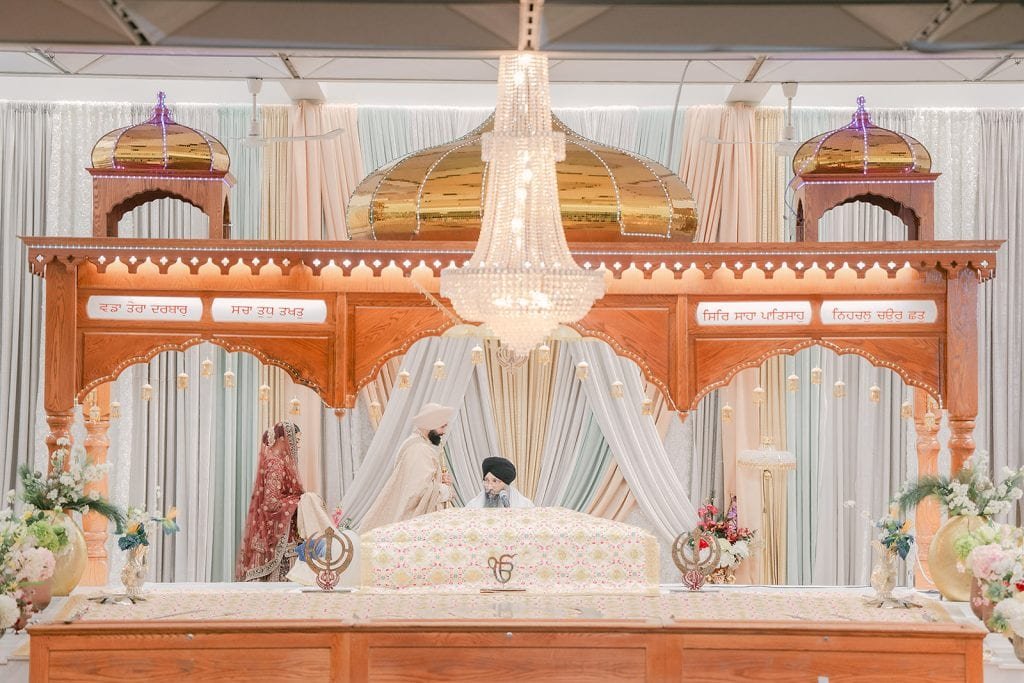
If this is your first time organising an Akhand Path at home or at the Gurdwara, the food side of it is more logistics than cooking. Here is what actually matters.
It runs for forty eight hours, and so does the food
The path itself is continuous, and people come and go the whole time. The mistake families make is planning for the bhog and forgetting the two days before it. Sewadars, family and visitors need feeding around the clock, and that is a very different service pattern from a wedding where everyone eats at once.
We usually plan it as a steady simple service through the program, then the full langar at bhog.
Keep the daily menu simple
Dal, a sabzi, roti, rice and chai covers it, refreshed through the day. Save the bigger spread for the bhog. Simple food served continuously and served hot is far better received than an elaborate menu that has been sitting.
Pure vegetarian, and be specific about what that means
No meat, no eggs, no fish is a given. What families often forget to specify is onion and garlic. Many households want them left out entirely for the duration. If that is your family, say so at booking rather than on the day. It changes how we cook every single dish, not just some of them.
Numbers at bhog
Plan for more people at bhog than you have invited. Sangat turns up. It is normal for a family expecting two hundred to feed three hundred, and running out is the one thing you will remember afterwards. We build a buffer into the quantity and it costs very little.
Talk to the Gurdwara kitchen early
Every Gurdwara has its own rules about what outside caterers can bring in, which equipment can be used and who is allowed in the langar hall. Find this out before you book anyone. We cater Gurdwara programs regularly across the GTA and we are happy to make that call with you.
Planning something?
Send us the date and a rough guest count and we will come back with a menu and a real per plate price.